

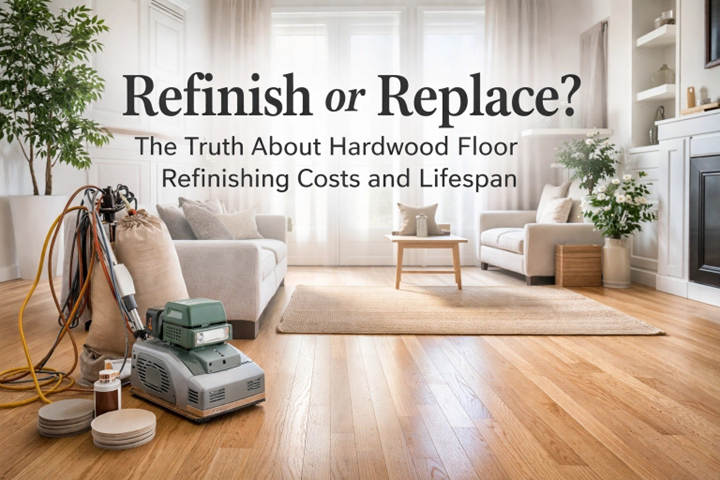
Should you refinish your hardwood floors or rip them out entirely? Here's the short answer: if your floors are structurally sound with only surface-level wear, refinishing is almost always the smarter (and way cheaper) choice. But if more than 30% of your floor is damaged, warped, or water-stained, replacement starts making more sense.
For most Ottawa and Nepean homeowners, refinishing can save you thousands of dollars while giving your home that "brand new floor" feel. Let's break down exactly how to figure out which route is right for you.
Signs Your Hardwood Floor Just Needs Refinishing
Before you start pricing out new flooring, take a good look at what you've got. Many floors that look tired and worn are actually perfect candidates for refinishing.
Your floors likely just need refinishing if you notice:
✅ Surface scratches and scuff marks from everyday wear
✅ Fading or discoloration from sun exposure
✅ Dull, worn finish that's lost its shine
✅ Minor dents from furniture or pet nails
✅ The wood underneath is still solid and level
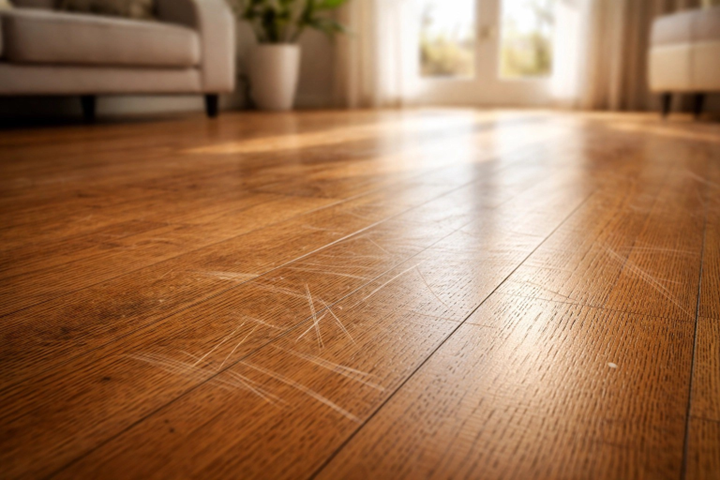
The beauty of refinishing is that it strips away all that surface damage and gives you a fresh canvas. A professional sanding removes the old finish (along with all those scratches and stains), and then new stain and sealant go on top. It's like hitting the reset button on floors you already love.
Here's a quick test: Get down on the floor and look at it from a low angle with light shining across the surface. If the damage you see is mostly in the finish layer and the actual wood grain looks intact, you're probably looking at a refinishing job: not a replacement.
When Replacement Is the Better Call
Sometimes refinishing just won't cut it. If your floors have deeper issues, throwing more finish on top is like putting a bandage on a broken bone.
You probably need full replacement if:
❌ Boards are warped, cupped, or buckling
❌ There's visible water damage or dark staining that goes deep into the wood
❌ You can feel soft spots when you walk (a sign of subfloor damage)
❌ The floor has been refinished multiple times and the wood is too thin to sand again
❌ More than 30% of the floor area has significant damage
❌ You want a completely different wood species, plank width, or style
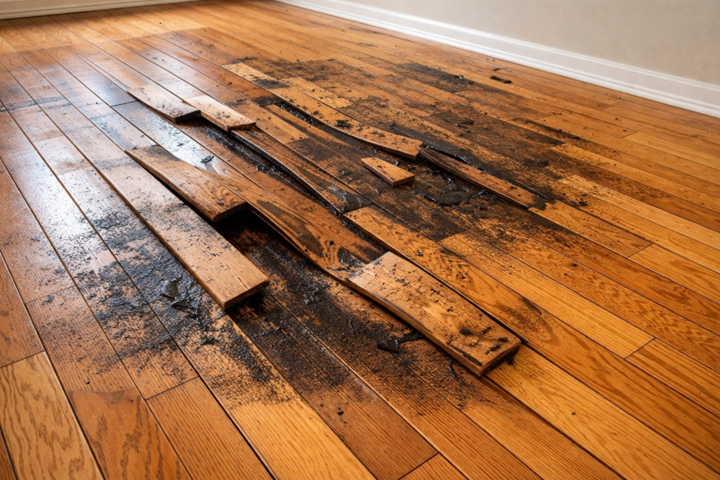
That 30% rule is a good benchmark. Once damage covers more than a third of your floor, the cost of patching and refinishing starts approaching (or exceeding) what you'd pay for new flooring anyway. At that point, you might as well start fresh.
Also, if your home has older solid hardwood that's been refinished several times over the decades, there may not be enough wood left to sand down. Each refinishing removes a thin layer, and eventually, you hit the tongue-and-groove or nail heads. A flooring professional can measure the wear layer and tell you exactly where you stand.
What Does Refinishing Cost in Ottawa and Nepean?
Let's talk numbers: because this is usually where homeowners get pleasantly surprised.
Refinishing costs in the Ottawa area typically run:
$4 to $8 per square foot for professional refinishing (including sanding, staining, and finishing)
$1,500 to $4,000 for an average-sized living room or main floor
$3,000 to $6,000 for a whole-home refinishing project
Compare that to full replacement:
$12 to $22 per square foot (materials, labour, and disposal of old flooring)
$6,000 to $15,000+ for a typical main floor replacement
That's a massive difference. For a 1,000-square-foot space, you could be looking at $5,000 for refinishing versus $15,000 or more for replacement. That's $10,000 back in your pocket: enough for a kitchen upgrade or a nice vacation.
And here's something most people don't realize: refinishing actually adds value to your home. Ac- cording to the National Association of Realtors, homeowners who refinish their hardwood floors recover about 147% of the project cost in added home value. That's one of the best ROIs in home improvement.
How Professional Staining Can Completely Transform Your Space
Here's where refinishing gets really exciting. You're not limited to bringing back the original look: you can completely change the vibe of your home with a new stain colour.
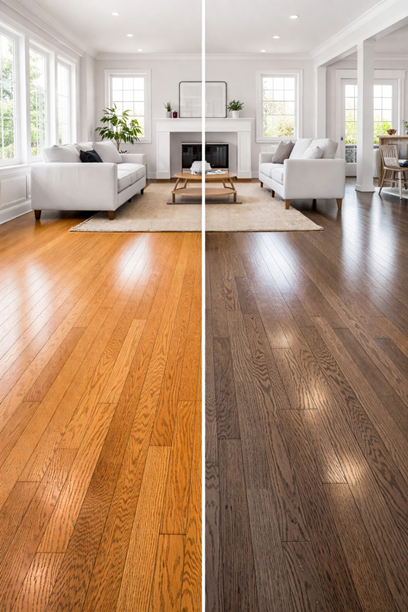
Popular stain transformations we see in Ottawa homes:
Orange-toned oak → modern grey-brown (instantly updates 90s and 2000s homes)
Dark walnut → lighter natural tones (opens up smaller rooms)
Mismatched rooms → unified colour throughout (perfect after renovations)
Builder-grade finish → rich, custom stain (adds character and warmth)
Professional staining isn't just about picking a colour off a chart. The final result depends on your wood species, the grain pattern, and how the stain is applied. An experienced refinisher knows how to prep the wood properly so the stain absorbs evenly and looks consistent from room to room.
This is a big reason why DIY refinishing often disappoints homeowners. Getting that smooth, professional finish: especially with darker stains that show every imperfection: takes skill and the right equipment.
How Long Should Hardwood Floors Actually Last?
Good hardwood floors are a long-term investment, and understanding their lifespan helps you make smarter decisions about refinishing versus replacement.
Expected lifespans:
| Floor Type | Total Lifespan | Refinishing Frequency |
| Solid Hardwood (3/4") | 75–100+ years | Every 7–10 years |
| Engineered Hardwood (thick veneer) | 30–50 years | 2–3 times total |
| Engineered Hardwood (thin veneer) | 15–25 years | 1–2 times total |
Solid hardwood is the clear winner for longevity. Those beautiful century-old floors you see in Ottawa's older neighbourhoods? They've likely been refinished 8-10 times over the decades. Each refinishing extends the life another 7-10 years.
Factors that affect how often you'll need to refinish:
Household traffic – Busy families with kids and pets need refinishing more often
Finish quality – Better polyurethane finishes last longer
Maintenance habits – Regular cleaning and felt pads under furniture make a huge difference
Ottawa's climate – Our dry winters and humid summers cause wood to expand and contract, which can wear finishes faster
The Quick Decision Guide
Still not sure which way to go? Here's a simple framework:
Choose refinishing if:
Damage is surface-level (scratches, dullness, minor wear)
Less than 30% of the floor is affected
You like your current wood but want a fresh look or new colour
Budget is a priority
Your floors haven't been refinished too many times already
Choose replacement if:
There's structural damage (warping, soft spots, deep water damage)
More than 30% of the floor needs major repair
You want a completely different wood species or plank style
The wear layer is too thin for another sanding
You're already doing major renovations and want everything new
Ready to See What Your Floors Could Look Like?
Whether your hardwood needs a simple refresh or you're considering a complete flooring overhaul, the first step is getting a professional assessment. Sometimes floors that look hopeless are actually easy fixes: and sometimes floors that seem fine have hidden issues worth addressing.
At Advantage Flooring & Renovations, we've helped hundreds of Ottawa and Nepean homeowners make this exact decision. We'll take a look at your floors, give you an honest assessment of their con- dition, and walk you through your options with real pricing: no pressure, no surprises.
Want to explore your options? Book a free consultation or browse our hardwood flooring selection to see what's possible. Whether you refinish or replace, you deserve floors you'll love walking on every day.


