

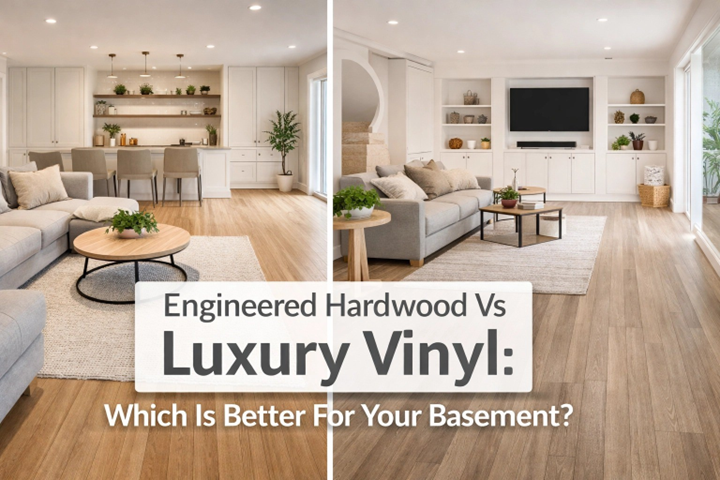
So, which one should you actually choose for your basement? Here's the short answer: for most Ottawa and Nepean basements, luxury vinyl plank (LVP) is the smarter choice. It handles moisture like a champ, costs less, and looks surprisingly close to real hardwood these days.
But hold on, that doesn't mean engineered hardwood is off the table. Depending on your basement's conditions and what you're after aesthetically, it might still be the right call for you.
Let's break it all down so you can make the best decision for your home.
Why Basement Flooring Is a Whole Different Ball Game
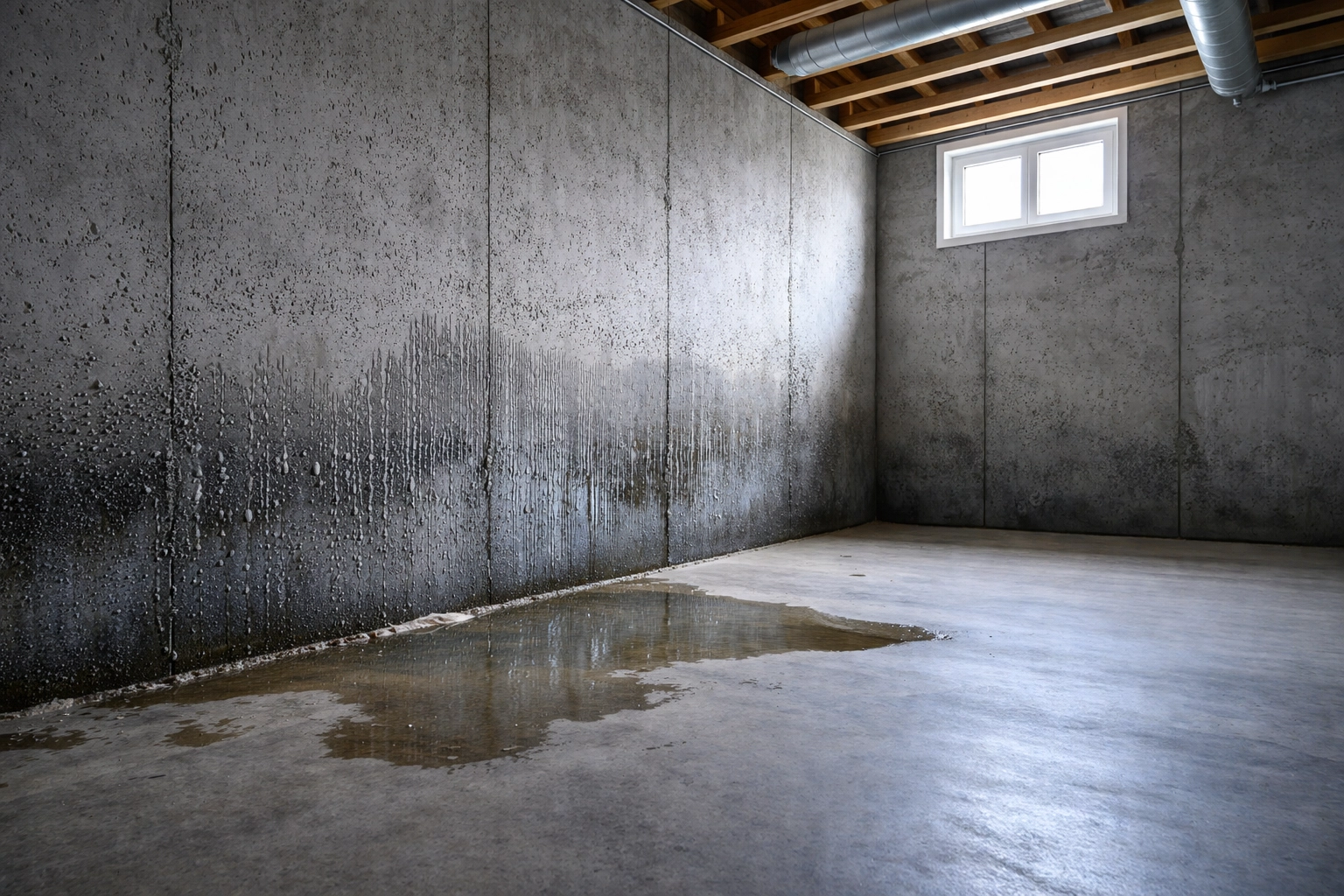
Your basement isn't like the rest of your house. It's below grade, which means it's constantly battling moisture from the ground, humidity fluctuations, and the occasional water intrusion (thanks, Ottawa spring thaw).
Here in Ottawa and Nepean, our basements deal with:
Freeze-thaw cycles that can cause moisture to seep through foundation walls
High humidity levels during our humid summers
Temperature swings that can stress certain flooring materials
Potential flooding from heavy rain or snowmelt
Whatever flooring you choose needs to handle these challenges without warping, buckling, or grow- ing mold. That's why choosing the right material matters more in your basement than anywhere else in your home.
Luxury Vinyl Plank: The Basement MVP
Let's start with luxury vinyl since it's become the go-to basement flooring for good reason.
Why LVP Works So Well in Basements
✅ 100% waterproof – This is the big one. LVP doesn't absorb water, period. Spills, minor flooding, high humidity, none of it will damage your floors.
✅ Budget-friendly – You're typically looking at $2-7 per square foot for materials, plus $1-5 per square foot for installation.
✅ Easy installation – Most LVP uses a click-lock system that's DIY-friendly if you're handy.
✅ Scratch-resistant – Got kids? Pets? LVP holds up great against everyday wear and tear.
✅ Comfortable underfoot – It's softer and warmer than tile, which is nice in a basement.
Where LVP Falls Short
❌ Not real wood – No matter how good the printing technology gets, it still doesn't feel exactly like hardwood when you walk on it.
❌ Can dent under heavy furniture – Heavy stationary objects like pool tables or massive book- shelves can leave impressions over time.
❌ Can't be refinished – Once it's worn out, you're replacing it, not sanding it down.
If you're curious about what's available, check out some great LVP options like the Goodfellow RockyMountain Athabasca or the Toucan SPC 5 Series for a durable, waterproof solution.
Engineered Hardwood: The Premium Choice
Now, if you've got your heart set on real wood, engineered hardwood is the only hardwood option that makes sense for a basement. Solid hardwood? Forget about it, it'll warp and buckle faster than you can say "moisture damage."

Why Engineered Hardwood Appeals to Homeowners
✅ Authentic wood look and feel – Nothing beats the warmth and character of real wood grain un- der your feet.
✅ Can be refinished – If the veneer is thick enough (3mm+), you can sand and refinish it once or twice over its lifespan.
✅ Long lifespan – With proper care, quality engineered hardwood can last 20-80 years.
✅ Adds home value – Real hardwood flooring is a selling point that buyers notice.
✅ Better dent resistance – It handles heavy furniture better than LVP.
The Downsides for Basement Use
❌ Not waterproof – This is the dealbreaker for many basements. Engineered hardwood is more moisture-resistant than solid hardwood, but excessive water exposure will still damage it.
❌ Higher cost – Expect to pay $3-14 per square foot for materials, plus $3-10 per square foot for professional installation.
❌ More complex installation – It needs to acclimate to your home's conditions before installation and typically requires professional help.
❌ Scratches more easily – Those beautiful wood surfaces can show scratches and gouges over time.
If you're leaning toward engineered hardwood, take a look at the Power Dekor Endura KRS Series or browse our full hardwood flooring collection.
The Head-to-Head Comparison
Let's put these two side by side so you can see exactly how they stack up:
| Factor | Luxury Vinyl (LVP) | Engineered Hardwood |
|---|---|---|
| Water Resistance | ✓ 100% waterproof | ✕ Water-resistant only |
| Cost (materials) | $2-7/sq ft | $3-14/sq ft |
| Installation Cost | $1-5/sq ft | $3-10/sq ft |
| DIY-Friendly | ✓ Yes | ✕ Not recommended |
| Authentic Wood Feel | ✕ No | ✓ Yes |
| Can Be Refinished | ✕ No | ✓ Yes (if thick veneer) |
| Scratch Resistance | ✓ Excellent | ✕ Fair |
| Dent Resistance | ✕ Fair | ✓ Good |
| Lifespan | 15-25 years | 20-80 years |
What About Ottawa's Specific Basement Challenges?
Here's where local conditions really matter.
Ottawa basements are notorious for moisture issues. Between our cold winters, spring flooding risks, and humid summers, your basement floor takes a beating that homes in drier climates don't experience.
Our honest recommendation: Unless your basement is bone-dry year-round (and we mean truly dry, not "seems dry"), LVP is the safer bet.
When Engineered Hardwood Can Work in Your Basement
That said, engineered hardwood isn't completely off the table. It can work if:
Your basement has never had water intrusion issues
You've installed proper moisture barriers and a quality subfloor system
Your humidity levels stay consistently controlled
You're willing to invest in a dehumidifier and monitor conditions
If you tick all those boxes, engineered hardwood can give you that beautiful, authentic wood look you're after.
When LVP Is the Clear Winner
Go with luxury vinyl if:
Your basement has any history of water or moisture problems
You're on a tighter budget
You want a "set it and forget it" floor that won't stress you out
You have kids or pets who'll put your floors through the wringer
What to Avoid (No Matter What You Choose)
A few quick warnings based on what we've seen over the years:
🚫 Don't skip the moisture test – Before installing anything, test your concrete slab for moisture. This step takes minutes but can save you thousands.
🚫 Don't cheap out on underlayment – Good underlayment provides moisture protection, cushion- ing, and sound dampening. It's worth the investment.
🚫 Don't ignore humidity control – Even waterproof LVP benefits from a well-controlled basement environment. Running a dehumidifier during humid months keeps everything in better shape.
🚫 Don't DIY engineered hardwood installation – Seriously. The acclimation requirements and in- stallation techniques are tricky. Get it done right the first time.
The Bottom Line
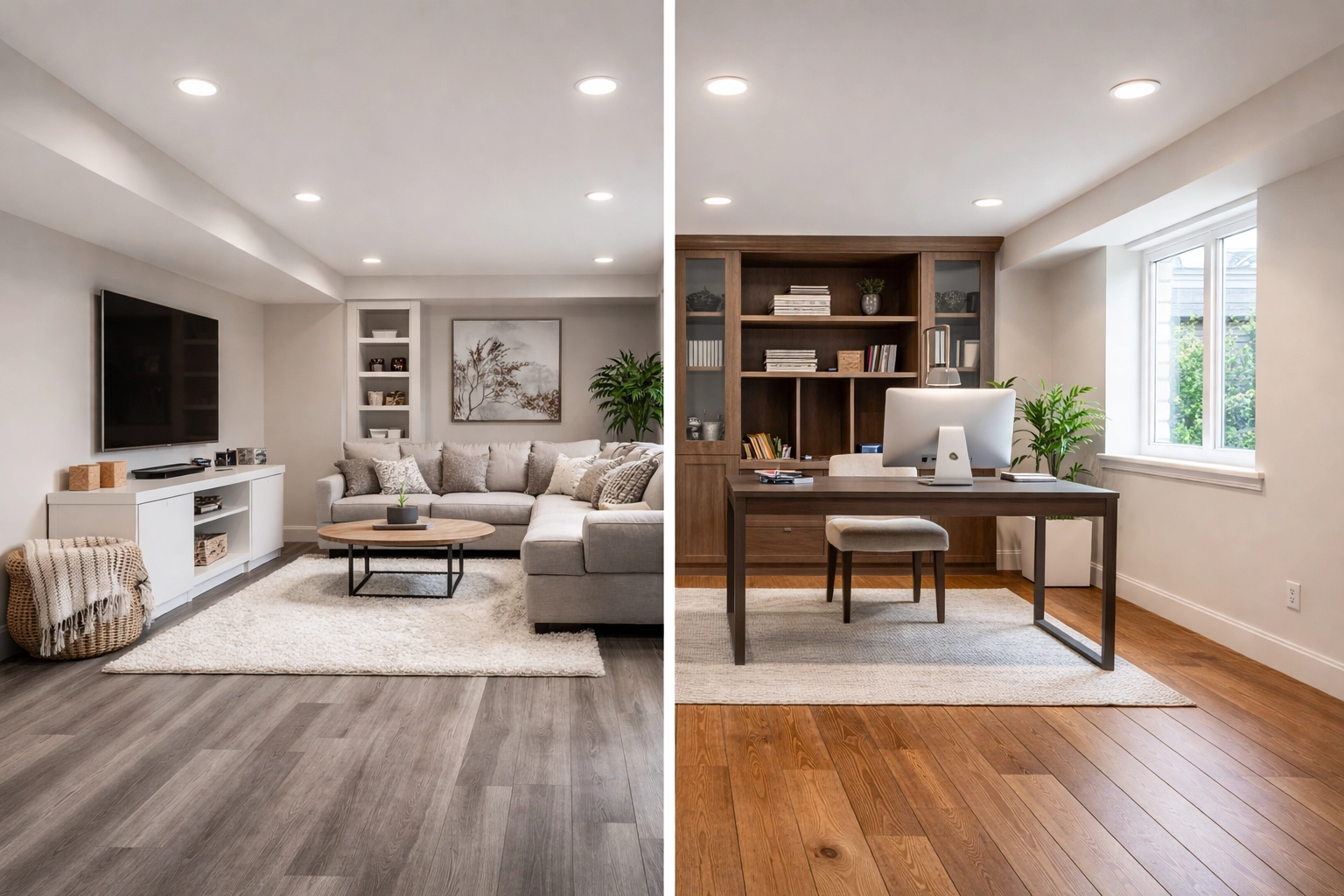
For most Ottawa and Nepean homeowners, luxury vinyl plank is the smarter choice for basement flooring. It handles our local moisture challenges without breaking a sweat, costs less upfront, and looks better than ever thanks to modern printing technology.
But if you've got a dry basement and your heart is set on real hardwood, engineered hardwood can absolutely work: just make sure you're prepared for the extra investment and maintenance requirements.
Still not sure which direction to go? That's totally normal. Every basement is different, and what works for your neighbor might not be the best fit for your space.
The team at Advantage Flooring & Renovations helps Ottawa and Nepean homeowners figure out this exact question all the time. Stop by, show us some photos of your basement, and we'll give you an honest recommendation based on your specific situation: no pressure, just real advice from people who've seen it all.
Your basement deserves flooring that'll look great and last for years. Let's make sure you pick the right one.


