

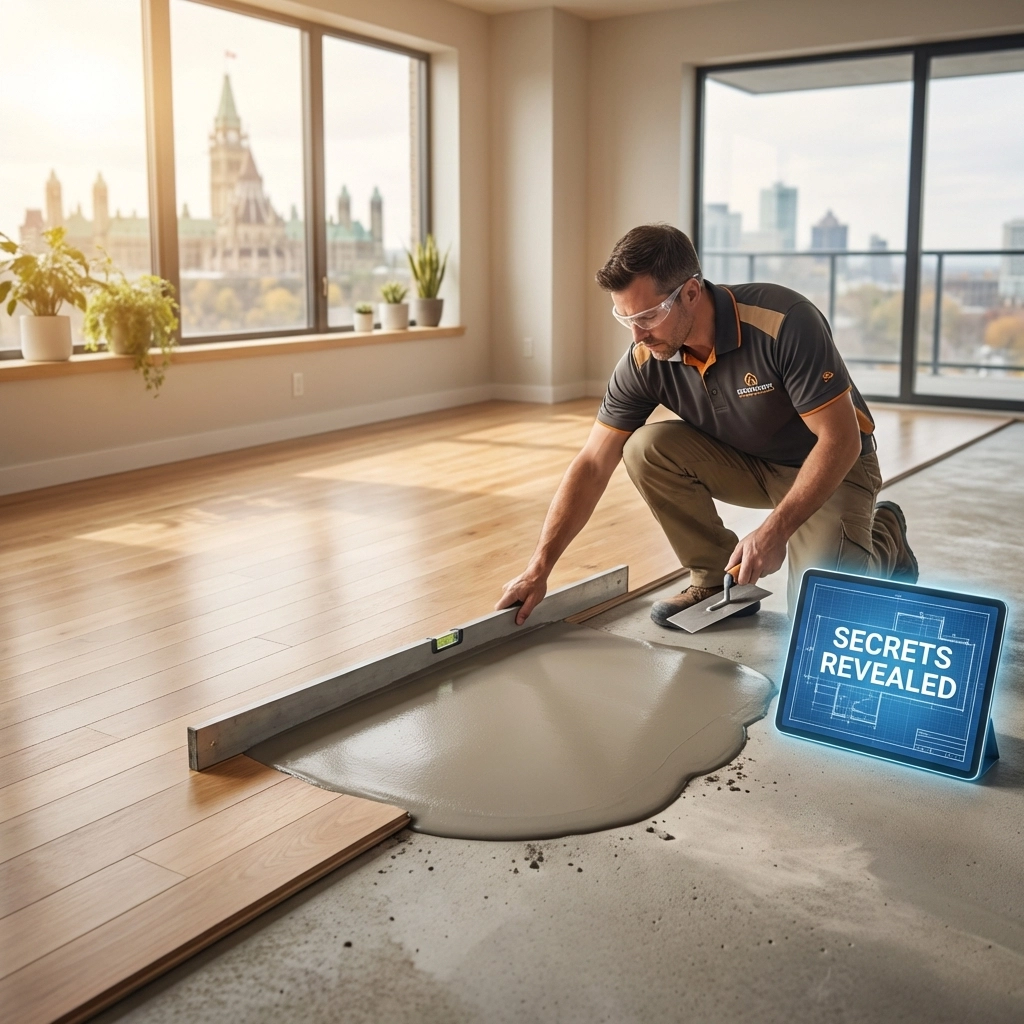
Have you ever wondered why your beautiful new floors still feel uneven after installation? The truth is, most floor leveling "problems" stem from homeowners not understanding what actually needs to happen before their flooring goes down. Here's what Ottawa contractors know (but don't always explain) about subfloor leveling.
Secret 1: Not Every Floor Actually Needs Professional Leveling
The Reality: Many contractors will quote you for full subfloor leveling when your specific flooring choice might not even require it.
Here's the breakdown most won't give you upfront:
✅ Floors That NEED Leveling:
- Tile installations (zero tolerance for unevenness)
- Rigid vinyl plank flooring
- Laminate with click-lock systems
❌ Floors That DON'T Always Need Leveling:
- Carpet (stretches over minor imperfections)
- Traditional hardwood (nails follow floor contours)
- Some flexible vinyl products
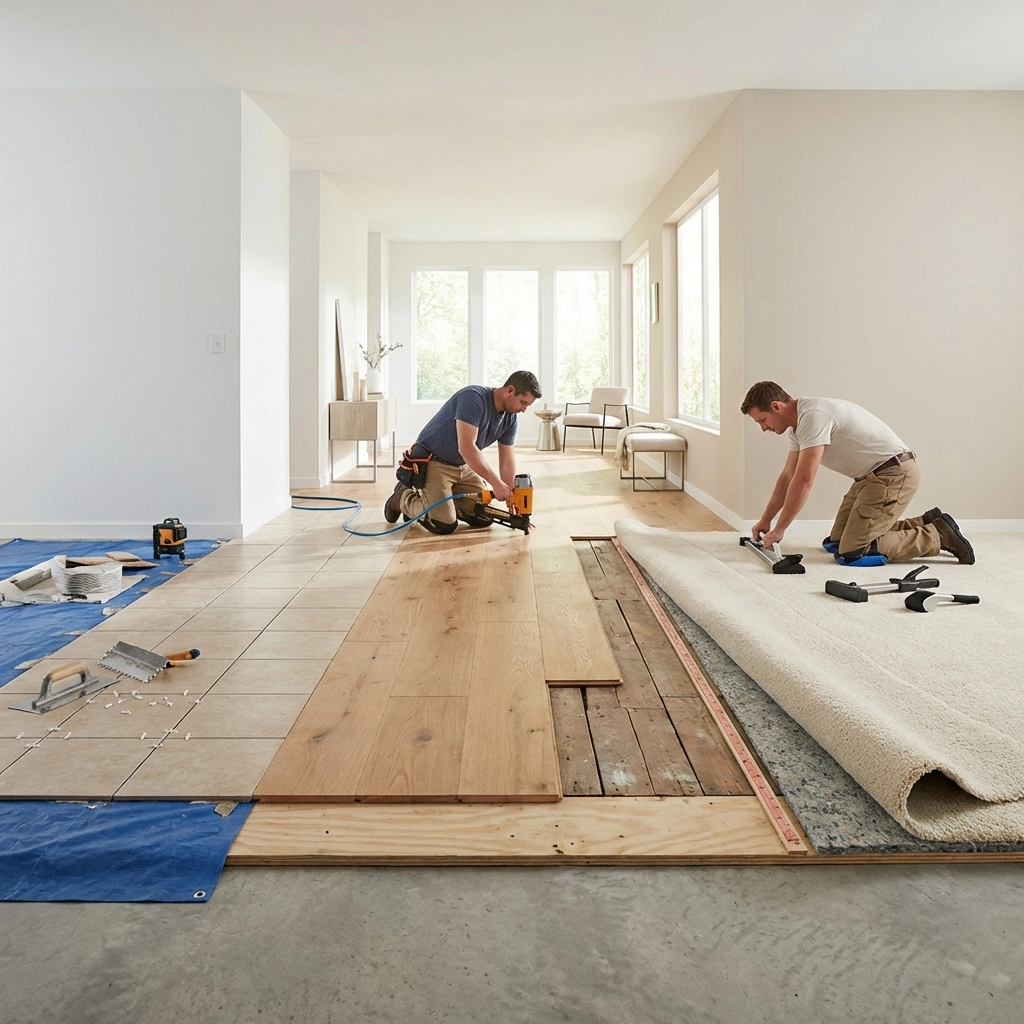
Why contractors don't always mention this: Subfloor leveling adds $3-8 per square foot to most projects. That's significant revenue they might not want to pass up.
What you should ask: "Does my specific flooring choice require a perfectly level subfloor, or can it accommodate minor variations?"
Secret 2: Your Subfloor Type Determines Everything (And Changes Your Costs)
Most homeowners don't realize that concrete and wood subfloors require completely different approaches – and dramatically different pricing.
Concrete Subfloors
What works: Self-leveling compounds can be applied directly
Cost range: $35-50 per bag (covers roughly 50 square feet)
Prep required: Thorough cleaning, primer application, edge sealing
Wood Subfloors
What works: Depends on your joist spacing and plywood thickness
Requirements for direct application:
- 16-inch on-center joists minimum
- At least 1¼ inches of plywood thickness
If you don't meet these requirements: You'll need structural repairs first, which contractors often don't mention until they're already on-site.
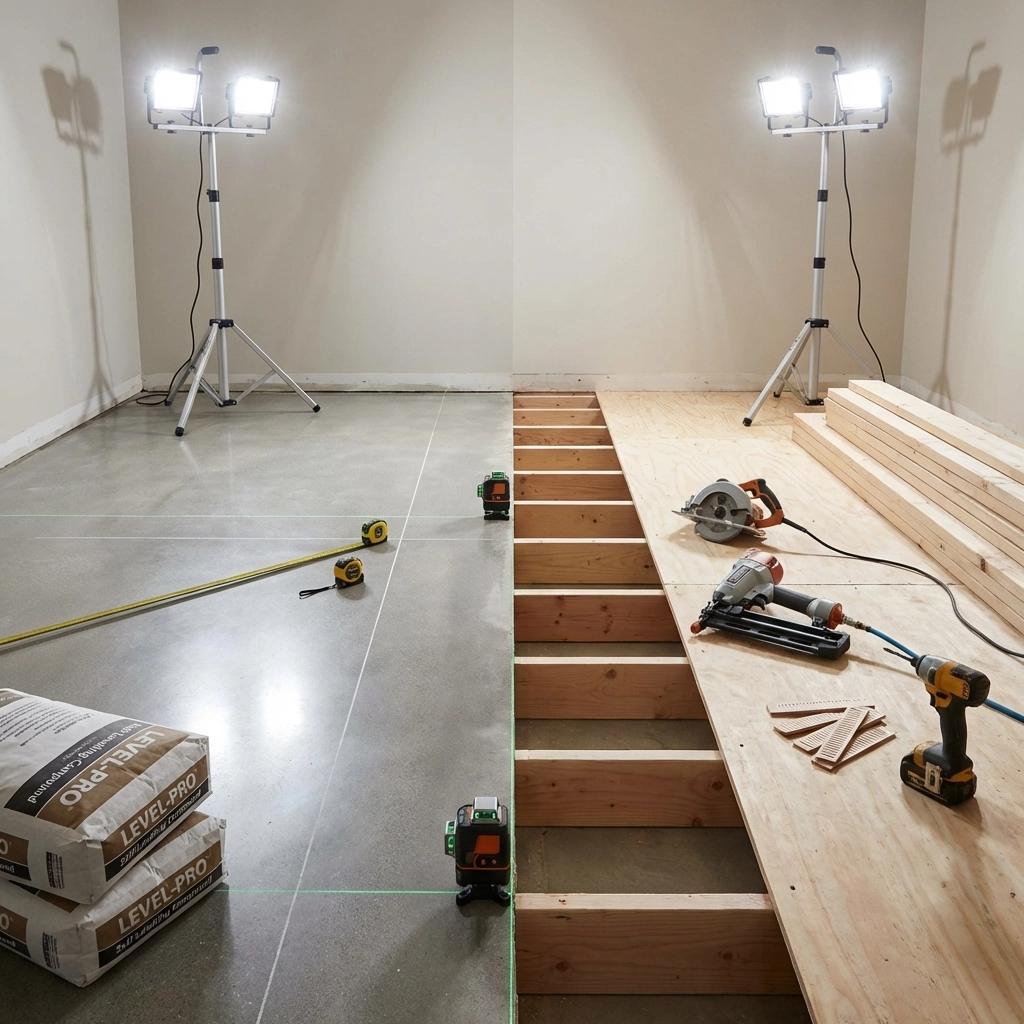
The expensive surprise: If your wood subfloor doesn't meet structural requirements, you're looking at additional costs for reinforcement before any leveling compound can be applied.
Secret 3: Preparation Makes or Breaks the Entire Job
Here's where many contractors cut corners (and where your project can go sideways):
Critical Prep Steps That Can't Be Skipped:
1. Edge Sealing
- Purpose: Prevents leveling compound from draining away
- What happens if skipped: Uneven application, wasted material, weak spots
2. Deep Cleaning and Vacuuming
- Purpose: Ensures proper adhesion
- What happens if skipped: Compound doesn't bond properly, future cracking
3. Primer Application (Concrete Only)
- Purpose: Creates proper bonding surface
- What happens if skipped: Complete adhesion failure
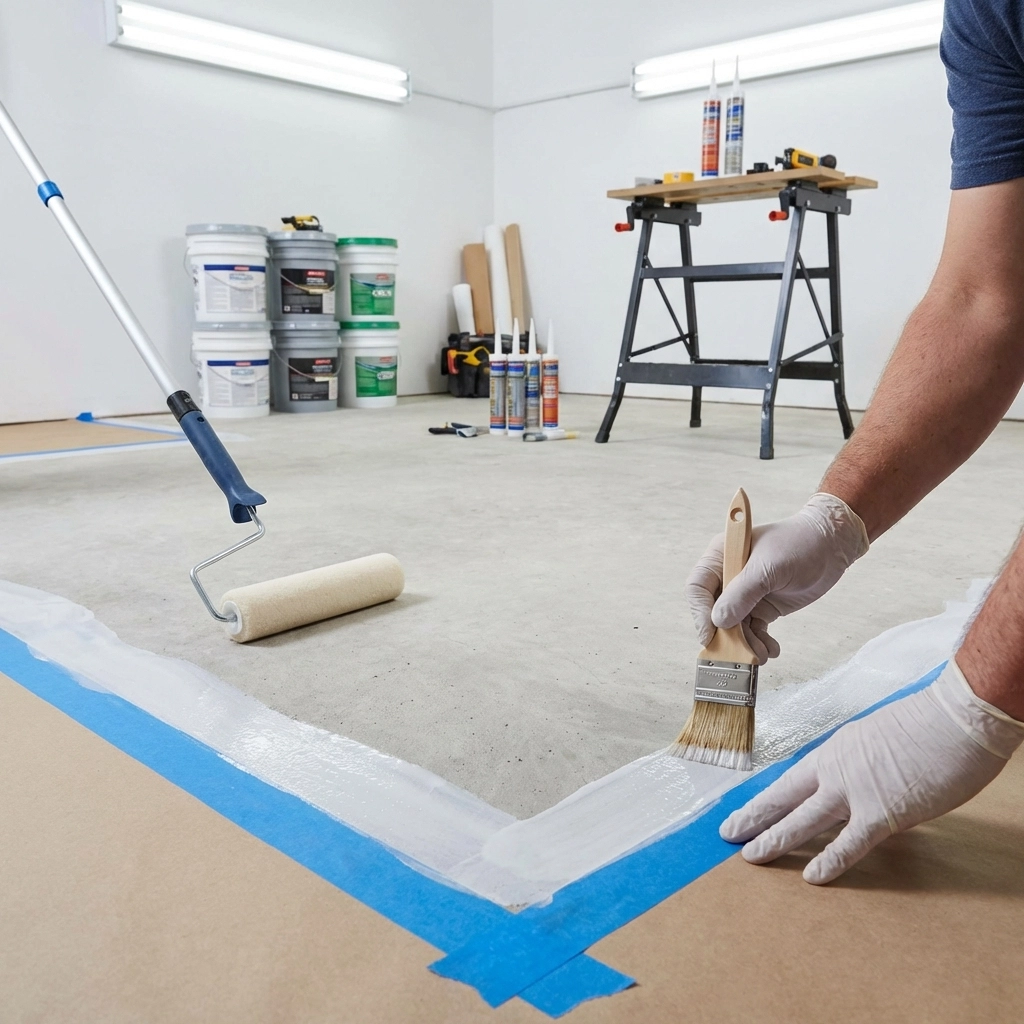
The contractor shortcut: Some crews rush through prep to save time, especially on smaller jobs. This almost always leads to problems down the road.
What to watch for: Ask to see their prep checklist and timeline. Professional prep should take 30-50% of the total project time.
Secret 4: Mixing Technique Determines Quality (And Most Get It Wrong)
The Industry Secret: How you mix self-leveling compound makes the difference between a perfect floor and a disaster.
The Wrong Way (What Causes Problems):
❌ Adding water gradually while mixing
❌ Mixing partial batches
❌ Inconsistent mixing times
The Right Way:
✅ Mix complete batches only
✅ Add all water at once
✅ Mix for manufacturer-specified time (usually 2-3 minutes)
Why this matters: Improper mixing creates areas that are both weak AND thick – they won't level properly and will fail prematurely.
Red flag: If your contractor is mixing small batches or adding water bit by bit, stop the work immediately.
Secret 5: Different Rooms Need Different Strategies
Ottawa homes often have mixed subfloor types, and smart contractors adjust their approach accordingly.
Upper Floors (Wood Subfloors)
Best practice: Fix structural issues first, then apply leveler
Why: Heavy leveling compound can stress weak OSB substructure
Cost consideration: Structural repairs are often more cost-effective than trying to fill large gaps with compound
Basements (Concrete Subfloors)
Best practice: Address moisture issues before any leveling work
Why: Moisture problems will destroy even perfect leveling work
Ottawa-specific concern: Our freeze-thaw cycles create unique basement moisture challenges
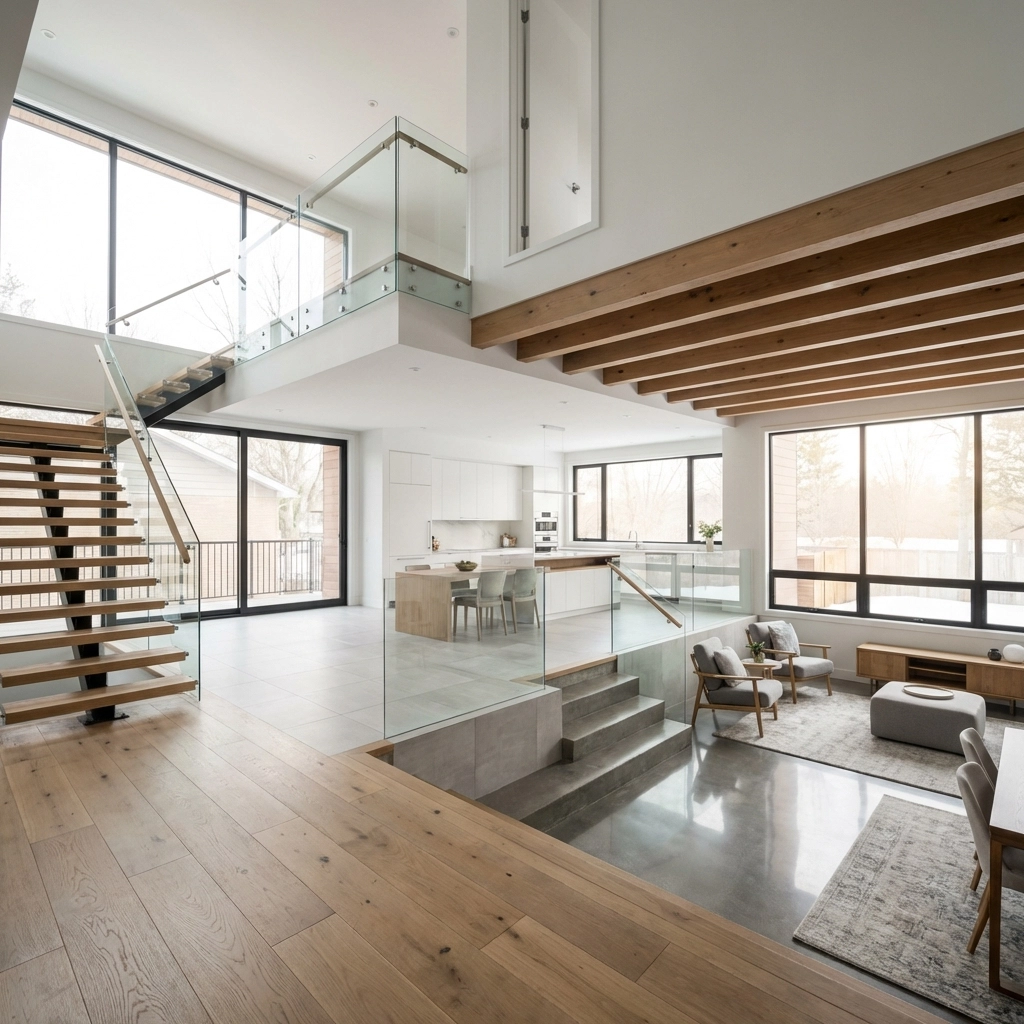
Main Floors (Usually Wood)
Best practice: Consider whether leveling is actually needed based on your flooring choice
Why: Many main floor "leveling" projects are unnecessary with the right flooring selection
Secret 6: Timing Your Project Saves You Money
Peak Season Reality: Most Ottawa contractors charge premium rates during spring renovation season (April-June).
Smart scheduling:
- Fall projects (September-November): Often 15-20% lower pricing
- Winter projects (January-March): Maximum savings but weather-dependent for material delivery
Weather considerations for Ottawa:
- Temperature needs to be above 50°F for proper curing
- Humidity levels affect drying times
- Plan for longer cure times in winter
Secret 7: Quality Products Cost More Upfront But Save Long-Term
Ottawa contractors work with premium brands like Lafarge and Ardex for good reason – these products perform reliably in our climate conditions.
Budget vs. Premium Comparison:
Budget Products ($25-35/bag):
- Shorter working time
- More prone to cracking
- Less tolerance for temperature variations
Premium Products ($40-55/bag):
- Extended working time for better application
- Superior crack resistance
- Better performance in temperature fluctuations
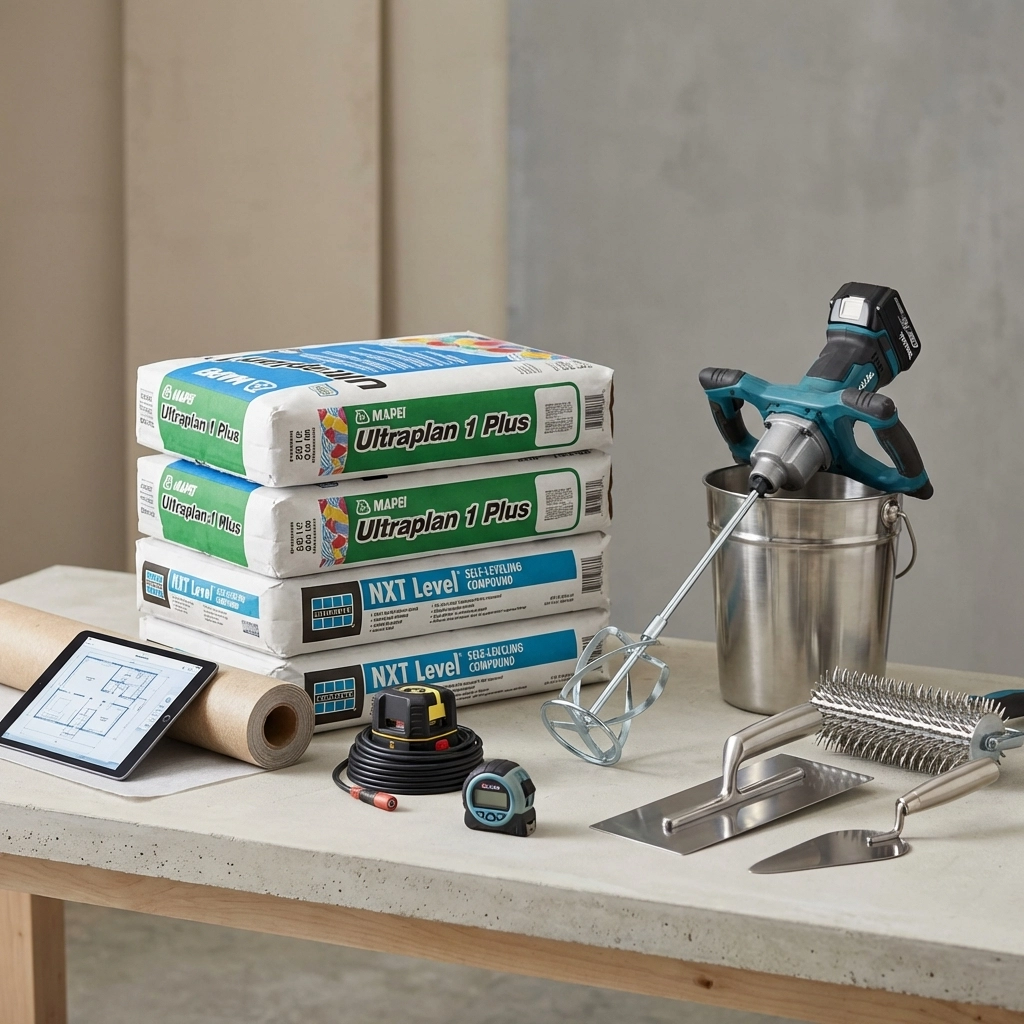
The long-term math: Premium products typically last 2-3 times longer, making them more cost-effective despite higher upfront costs.
What This Means for Your Ottawa Home
Understanding these "secrets" puts you in control of your flooring project. You can now:
✅ Ask specific questions about whether leveling is actually needed
✅ Understand pricing differences between concrete and wood subfloors
✅ Ensure proper preparation isn't being rushed
✅ Verify mixing techniques are being followed
✅ Make informed decisions about product quality
Bottom line: Subfloor leveling isn't mysterious – it's about applying the right technique for your specific situation and not paying for unnecessary work.
At Advantage Flooring & Renovations, we believe informed homeowners make better decisions. We'll walk you through exactly what your floors need (and don't need) before any work begins.
Want to know if your floors actually need leveling? We offer free assessments that give you the straight story about your subfloor situation. Because the best flooring projects start with honest conversations about what's really required.


